




AI and Cybersecurity: The Digital Arms Race of 2025
The digital world is evolving faster than ever. Artificial Intelligence (AI) is reshaping every aspect of life — from how we work and communicate to how we defend our data. But while AI empowers cybersecurity like never before, it also fuels the rise of sophisticated cyber threats.
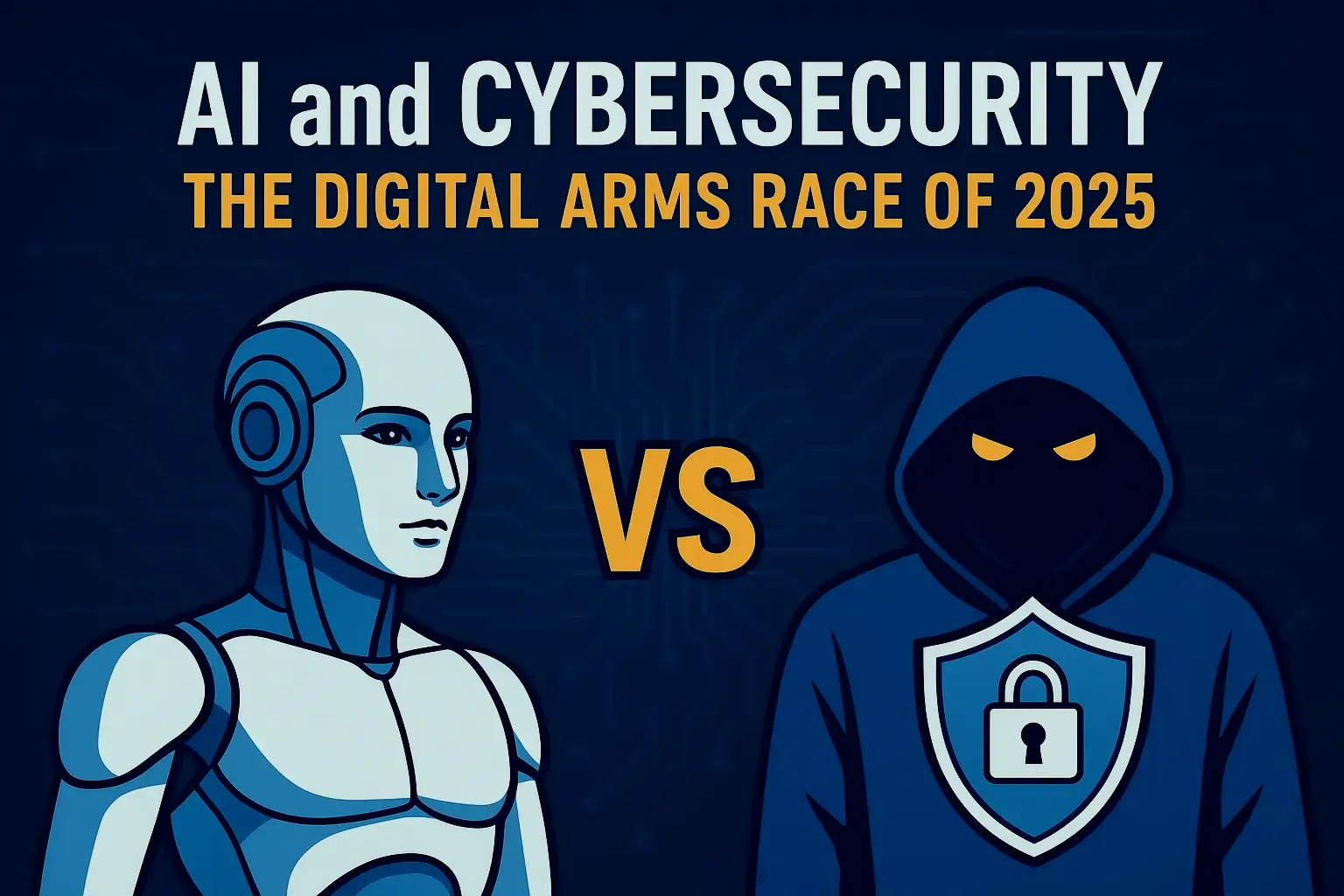
Welcome to the digital arms race of 2025, where AI is both the shield and the sword.
⚙️ AI: The New Weapon in Cyber Defense
AI has become the backbone of modern cybersecurity systems.
In 2025, companies no longer rely solely on human analysts — they use AI-driven algorithms that can:
- Detect unusual behavior patterns in real time
- Predict and block cyberattacks before they occur
- Automatically isolate infected systems
Tools like Darktrace, CrowdStrike Falcon, and IBM Watson Security use machine learning to track billions of data points and adapt faster than any human team ever could.
💡 Example: AI can detect a phishing attempt or ransomware attack in milliseconds — long before it causes damage.
🕵️♂️ The Rise of AI-Powered Cyberattacks
But here’s the catch — the same technology that protects us also empowers cybercriminals.
Hackers are now using Generative AI to create highly personalized phishing emails, fake voices, and even deepfake videos to trick employees and users.
According to recent reports, AI-based cyberattacks increased by 35% in early 2025, targeting financial institutions, hospitals, and government networks.
🎯 Attackers use AI to:
- Write convincing scam messages
- Automate password guessing with deep learning
- Mimic executives’ voices for social engineering scams
This new threat landscape makes AI a double-edged sword — incredibly powerful but dangerously unpredictable.
🔐 Quantum Computing: The Next Cybersecurity Frontier
While AI dominates the present, quantum computing looms as the next challenge.
Quantum machines could crack today’s encryption methods within seconds.
In response, cybersecurity experts are racing to develop quantum-resistant encryption powered by AI.
Major organizations like Google, Microsoft, and the NSA are already testing new cryptographic standards to stay ahead of hackers.
💬 In short: Whoever masters AI and quantum protection first will dominate the digital battlefield.
🧠 AI + Human Intelligence = The Winning Formula
Despite automation, human insight remains crucial.
AI can process massive data, but it lacks the intuition and ethical judgment that human analysts provide.
That’s why leading cybersecurity firms now use a hybrid defense model: AI handles detection, while humans handle decision-making.
🔄 This collaboration helps:
- Reduce false positives
- Improve threat response speed
- Maintain accountability and ethical oversight
AI doesn’t replace humans — it amplifies them.
🧩 Real-World Impact in 2025
Cybersecurity has become a top investment area in 2025.
Governments, financial institutions, and even small businesses are spending billions on AI-powered defense systems.
📊 2025 Market Snapshot:
- Global cybersecurity market: $240+ billion
- AI-driven security tools: expected to exceed $80 billion
- AI job roles in cybersecurity: up 42% YoY
This growth shows how critical AI is — not just for security, but for economic stability and national defense.
🚀 Preparing for the Future
As we move deeper into an AI-powered era, digital literacy and awareness are just as important as technology itself.
Here’s how individuals and businesses can stay protected:
- Adopt AI-powered antivirus and firewall tools.
- Train employees to recognize AI-generated phishing.
- Update encryption methods to quantum-safe standards.
- Monitor system behavior continuously using AI-driven analytics.
The goal is not to fear AI — but to use it smarter than the attackers do.
🧭 Final Thoughts
The digital arms race of 2025 proves one thing:
Artificial Intelligence is the most powerful ally and the most dangerous enemy in cybersecurity.
As AI continues to evolve, the future will belong to those who can balance innovation with security — using intelligence not just to defend, but to anticipate the next move.